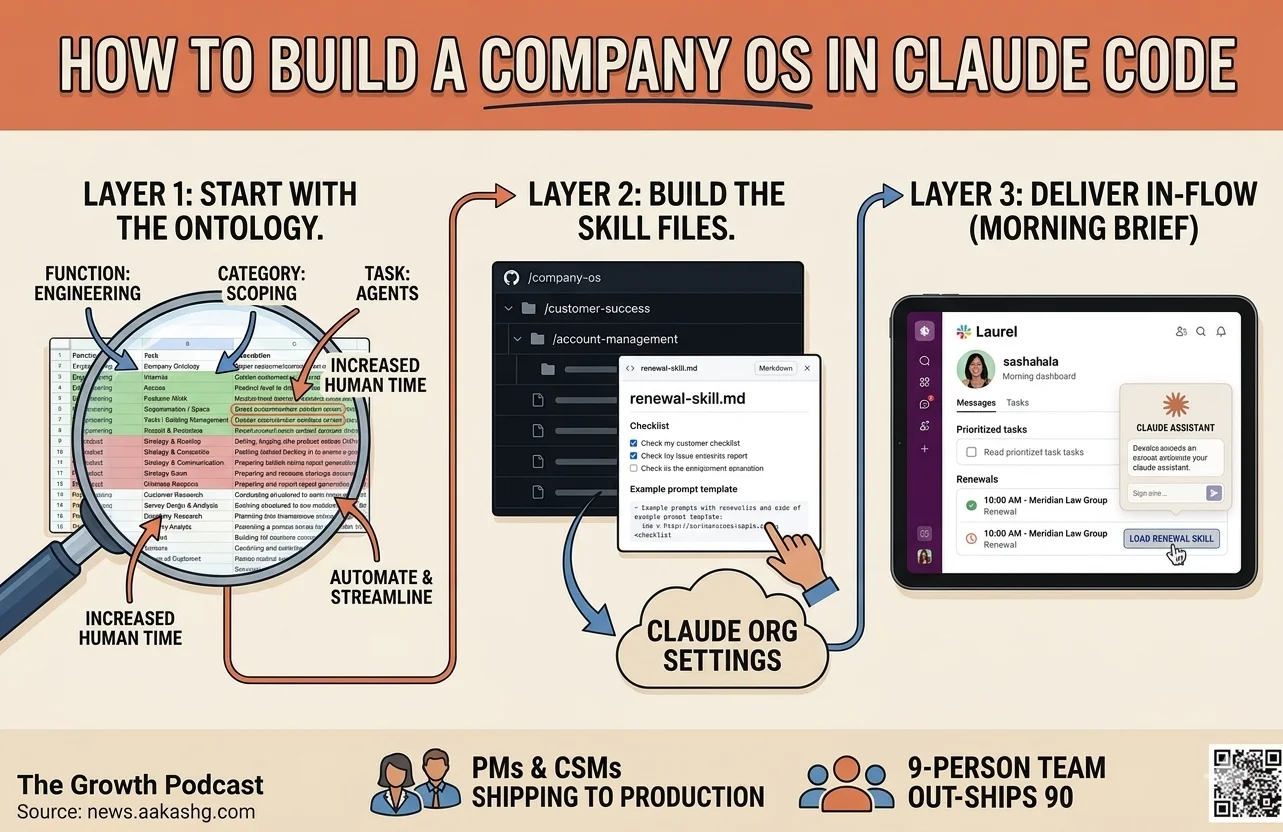
Quick answer: Building a company with Claude Code involves integrating an agentic AI directly into your local file system to automate repetitive workflows. For industrial drone operations, this means converting raw blade inspection data into client-ready reports 10x faster by automating the data pipeline and infrastructure management.
Building a Company with Claude Code: Moving from Manual Flight to AI-Driven Operations
Most technical founders treat AI as a glorified search engine or a copywriting tool. The real value isn't in the chat interface; it's in the terminal. Using Claude Code to build a company means shifting from asking an AI for advice to letting an agent execute the actual infrastructure of your business.
For a drone operation, this is the difference between spending six hours manually sorting through 400 blade photos and having a local agent automate the sorting, tagging, and reporting pipeline while you're still on the vessel.
How do you actually build a company with Claude Code?
Building with Claude Code means giving the AI direct access to your local file system and terminal to write, test, and deploy code that handles your business logic. You stop prompting for 'ideas' and start prompting for 'implementations.'
In a service-based business, this looks like building custom cron jobs to handle tax filing reminders, automating USD to TWD conversion tracking, or creating a structured memory system for project archives. You are essentially building a software layer on top of your physical expertise.
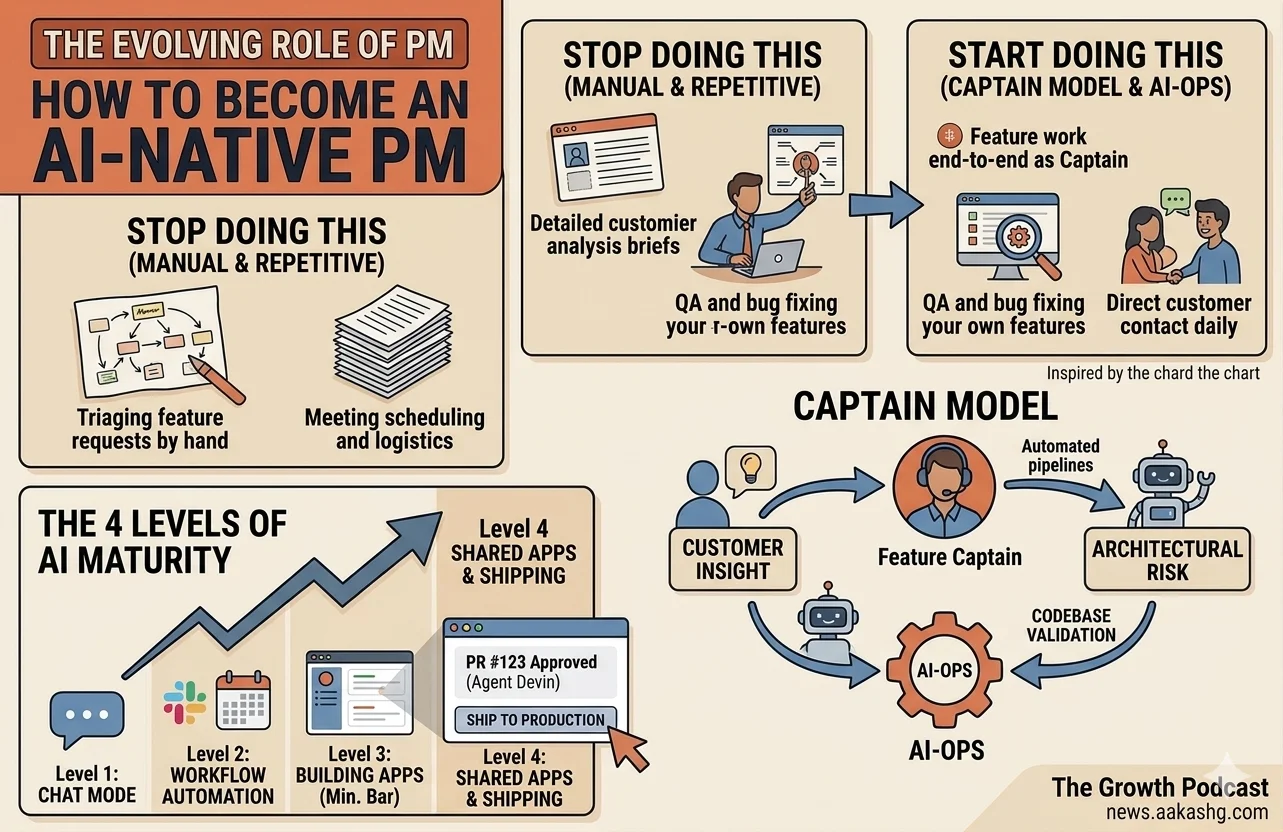
Why is the 'Agentic' approach better than a chat interface?
Chat interfaces are disconnected. They don't know where your files are, how your folders are structured, or what your specific client requirements are unless you paste them every time. An agentic system like Claude Code operates within your environment.
| Feature | Chat Interface | Claude Code (Agentic) |
|---|---|---|
| Context | Copy-paste/Uploads | Direct local file system access |
| Execution | Suggests code | Writes and runs code in terminal |
| Workflow | Linear conversation | Iterative building and fixing |
| Utility | Content generation | Infrastructure automation |
When I'm managing inspections for the Greater Changhua OWF, I don't have time to 'chat.' I need a system that can look at a directory of drone images and execute a script to organize them by turbine ID. An agent does the work; a chatbot tells you how to do the work.
How does this apply to wind turbine blade inspection?
Industrial inspection is high-value but structurally fragile because it depends on the pilot's physical presence. The bottleneck is always the post-flight reporting phase.
By using Claude Code to build automated reporting pipelines, you shift the value from the flight (which is commoditizing) to the data ownership and analysis (which is scalable).
Here is how the technical transition looks for an inspection business:
- Data Ingestion: Automate the transfer of high-resolution imagery from the Matrice 300/350 RTK to a structured local archive.
- Automated Tagging: Use AI to sort images by blade section (root, mid-span, tip) and defect type (leading edge erosion, lightning strike).
- Report Generation: Programmatically populate inspection templates with identified defects and GPS coordinates.
- Client Delivery: Automate the notification and delivery process for the final PDF reports.
In the Taiwan and Japan markets, where regulatory barriers are high and precision is non-negotiable, the company that delivers the report fastest with the most accurate data wins the contract. AI doesn't replace the pilot; it replaces the analyst.
Can AI automation reduce single-point-of-failure risk?
Yes, by documenting and codifying the 'expert' knowledge in your head into a system. If the entire operation depends on one person's memory, the company is just a high-paid freelance gig.
Using Claude Code to build a internal knowledge base—a _BRAINAI system—allows you to standardize your inspection process. When you bring on a second operator or a subcontractor for a 160-turbine project in Japan, you aren't training them via voice notes. You are giving them a codified system of operations that the AI helps maintain.
What is the strategic advantage for operators in Taiwan and Japan?
Taiwan’s offshore wind sector is expanding rapidly, but the administrative overhead of permits and bimonthly tax filings (like the 5% 營業稅) can swallow a solo founder's time.
Building a company with Claude Code allows you to automate the 'boring' side of the business. Instead of manually calculating your day rates ($650/work day vs $550/weather day), you build a local tool that handles the bookkeeping and tax deadlines automatically. This frees you to focus on the high-barrier work: precision flight operations in harsh offshore conditions.
Moving from 'Freelancer' to 'Infrastructure Owner'
If you only sell flight hours, you are selling your time. If you sell an AI-driven inspection reporting system, you are selling a product.
The goal is to build non-linear income. By using AI to automate the reporting and data ownership, you create a service that can run without your physical presence. You move from being the guy with the drone to the guy with the data pipeline.
This is the only way to scale a technical service business without exponentially increasing your workload. The drone is the sensor; the AI is the product.
I provide professional wind turbine blade inspections and AI-automated reporting for renewable energy assets across Taiwan and Japan.