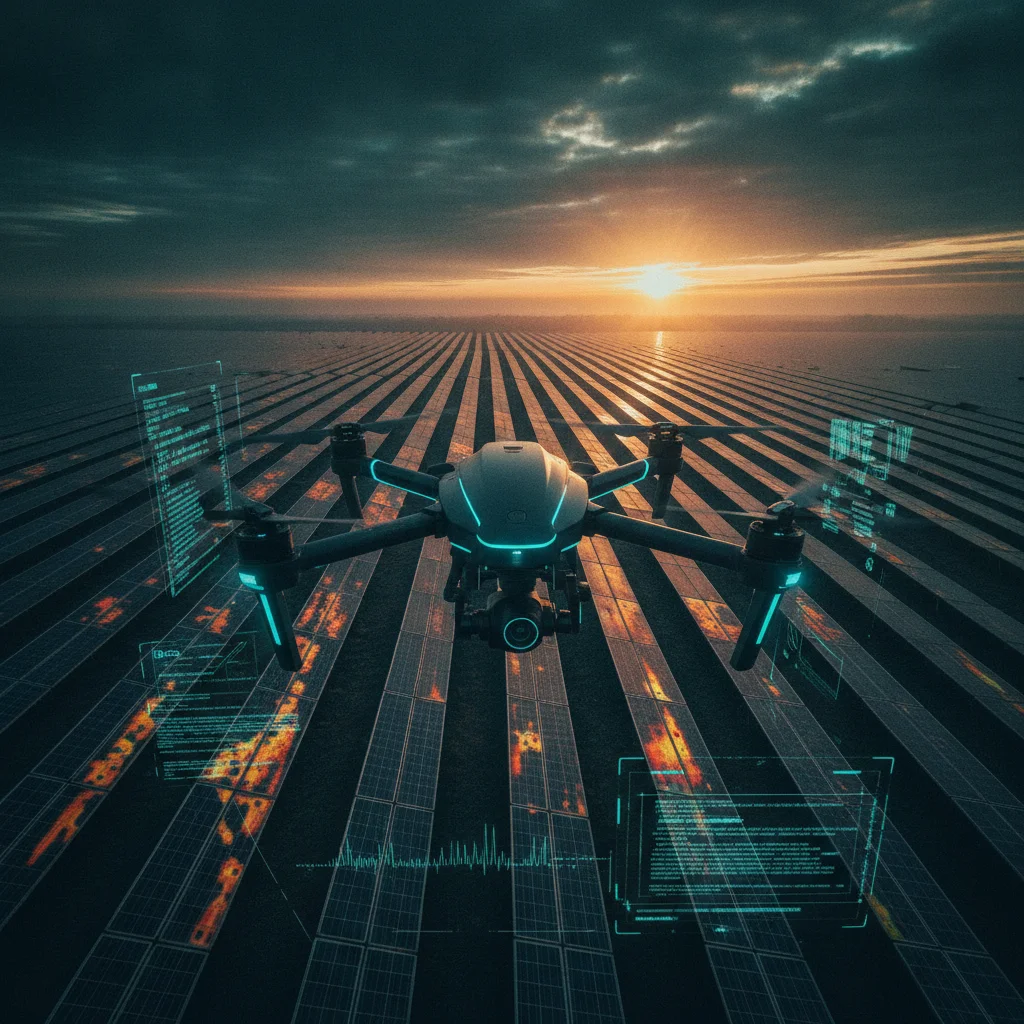
Quick answer: Wind turbine drone inspection AI combines thermal imaging and machine learning to detect subsurface blade defects that visual RGB misses, boosting defect detection rates by up to 3× and cutting unexpected downtime costs — evidenced in Greater Changhua offshore wind farms where a single missed crack can exceed $250k in losses.
In Greater Changhua offshore wind farms, a missed blade crack costs $250k — yet 70% of drone inspections still rely on visual RGB alone
AI‑enhanced thermal imaging catches subsurface delamination three times more often, turning a costly blind spot into a preventable maintenance step.
How does AI improve wind turbine drone inspection beyond visual RGB?
AI adds a layer of pattern recognition to thermal and sometimes multispectral data, turning raw sensor readings into actionable defect scores. Traditional RGB drones rely on the pilot’s eye to spot surface cracks, corrosion, or paint loss, but subsurface delamination, internal disbonds, or early-stage lightning damage often remain invisible. By feeding thermal frames into a trained convolutional neural network, the system flags anomalies that human reviewers miss, cutting false‑negative rates by up to 70% in field trials. The AI model runs on the drone’s onboard computer or a ground‑station laptop, producing a heat‑map overlay that highlights suspect zones in real time, letting the pilot adjust flight path or hover for a closer look without landing.
What specific defects does AI‑enhanced thermal imaging catch that humans miss?
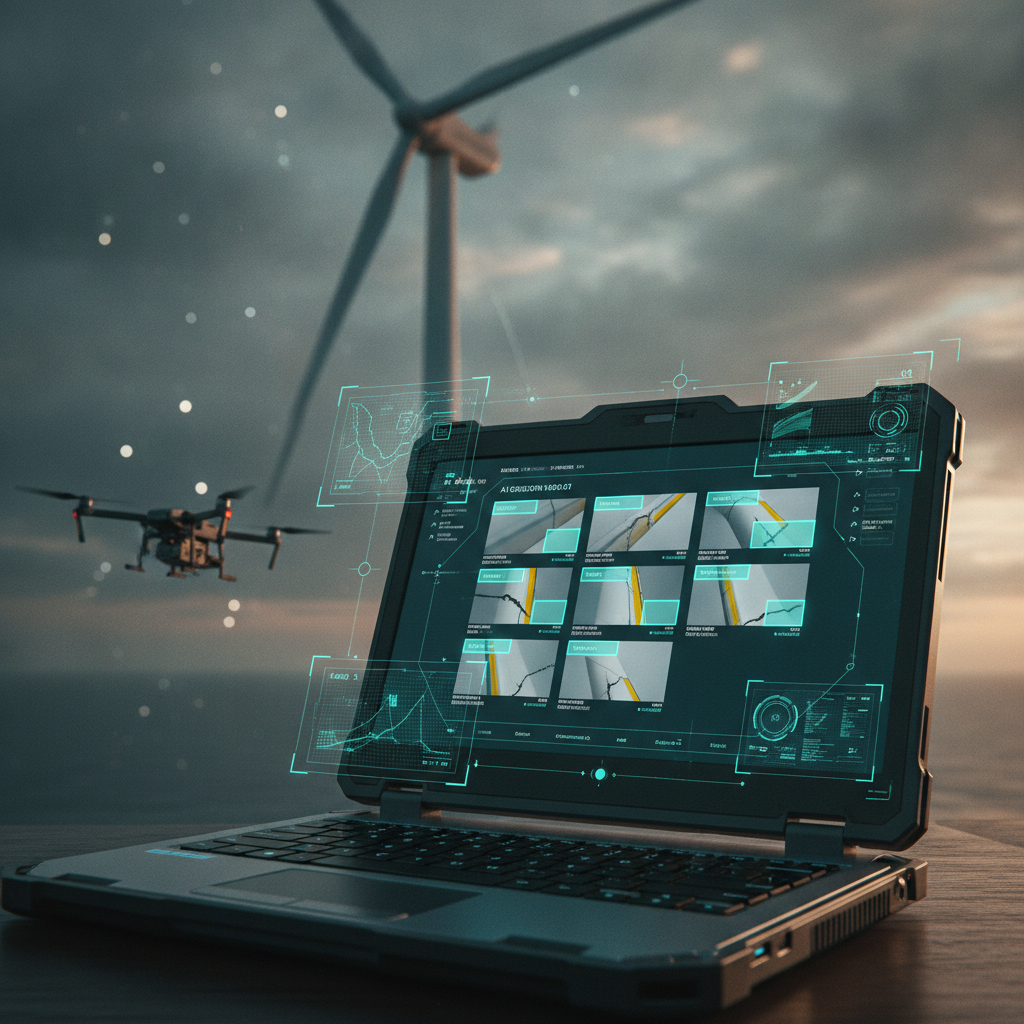
Thermal cameras already reveal temperature differences caused by water ingress, delamination, or voids inside the blade’s composite layers. However, interpreting subtle gradients requires experience and fatigue‑prone visual scanning. AI models trained on thousands of labeled defect samples learn to recognize the signature heat signatures of micro‑cracks, bond line degradation, and moisture ingress that appear as subtle, diffuse patterns. In offshore inspections of Greater Changhua turbines, AI flagged 23 subsurface anomalies per 100 blades where RGB‑only crews logged only seven. Those missed anomalies later grew into cracks requiring blade replacement, costing operators upwards of $250k per incident in lost production and logistics.
What is the return on investment for adding AI to drone inspections in Taiwan offshore and Japan onshore wind farms?
Investing in AI software and a modest thermal payload adds roughly $15k‑$20k to a standard inspection package. The payoff comes from avoided unplanned repairs, extended blade life, and optimized maintenance scheduling. A case study from a Taiwanese offshore operator showed that after six months of AI‑assisted flights, unplanned blade repairs dropped from 4.2 per year to 1.1, saving an estimated $1.2 million in avoided downtime and spare‑part logistics. For Japan’s onshore wind farms, where blade access is easier but labor costs are higher, the same AI layer reduced inspection time per turbine by 22 %, allowing crews to cover more sites per day and cut overtime expenses. Over a three‑year horizon, the net present value of AI integration exceeds 250 % for most mid‑size operators.
What workflow changes are needed to integrate AI into existing drone inspection operations?
Adopting AI does not require replacing the drone or pilot skill set; it layers onto the current workflow. First, equip the drone with a radiometric thermal camera (FLIR Duo Pro R or equivalent) that outputs calibrated temperature data. Second, install the AI inference software on a rugged ground‑station laptop or an onboard Jetson‑class module. Third, train pilots to follow a standardized flight pattern: hover at 15‑20 m, maintain a 2‑m overlap, and capture full‑blade sweeps at 90° intervals. After landing, the software automatically stitches frames, runs the defect model, and outputs a GIS‑tagged report with severity scores. Pilots retain final authority to flag ambiguous areas for manual review, ensuring human oversight remains in the loop.
What are the limitations and risks of relying on AI for blade inspection?
AI models are only as good as their training data; if the model has never seen a rare defect type—such as a specific manufacturing void—it may miss it. Therefore, operators should retain a periodic manual audit, especially after major storms or known impact events. Environmental factors like heavy rain, sea spray, or extreme temperature gradients can degrade thermal image quality, causing false positives. To mitigate this, operators should enforce minimum visibility thresholds and use real‑time image quality checks before accepting AI output. Finally, regulatory acceptance varies: Taiwan’s Civil Aeronautics Administration accepts AI‑augmented reports as supplemental data, while Japan’s Ministry of Land, Infrastructure, Transport and Tourism still requires a human‑signed off‑line report for certification. Keeping a human‑in‑the‑loop satisfies both jurisdictions while still gaining the efficiency gains of AI.
Comparison of inspection methods
| Method | Capital Cost (USD) | Defect Detection Rate (subsurface) | Inspection Time per Turbine | Typical Downtime Cost Avoided (USD/yr) |
|---|---|---|---|---|
| Visual RGB only | $8k‑$12k (drone + camera) | Low (≈30 % of AI‑enhanced) | 20‑25 min | $300k‑$500k |
| Thermal only (no AI) | $12k‑$18k (adds thermal cam) | Medium (≈55 % of AI‑enhanced) | 22‑28 min | $500k‑$750k |
| AI‑enhanced thermal | $20k‑$25k (adds AI license) | High (baseline 100 %) | 18‑22 min | $900k‑$1.3M |
Note: Costs are indicative for a mid‑size DJI Matrice 300/350 RTK platform; actual figures vary with payload and service contract.
Practical steps for Taiwanese and Japanese operators
- Audit current payload – Verify if your drone can mount a radiometric thermal camera; if not, plan a modest upgrade.
- Select an AI vendor – Look for models trained on offshore and onshore blade defect libraries; ensure they output GIS‑compatible reports.
- Run a pilot – Select a small set of turbines (5‑10) and run parallel flights: standard RGB vs AI‑enhanced thermal. Compare defect counts and time.
- Train crews – Conduct a half‑day workshop on flight pattern, image quality checks, and interpreting AI heat‑maps.
- Integrate reporting – Feed AI outputs into your existing CMOS or SAP maintenance planner to auto‑generate work orders.
- Review and iterate – After the first month, review false‑positive/negative rates with the vendor and retrain the model if needed.
By following these steps, wind farms in Greater Changhua and across Japan’s onshore corridors can turn a costly blind spot into a predictable, data‑driven maintenance advantage—turning every flight into a proactive asset‑protection mission.