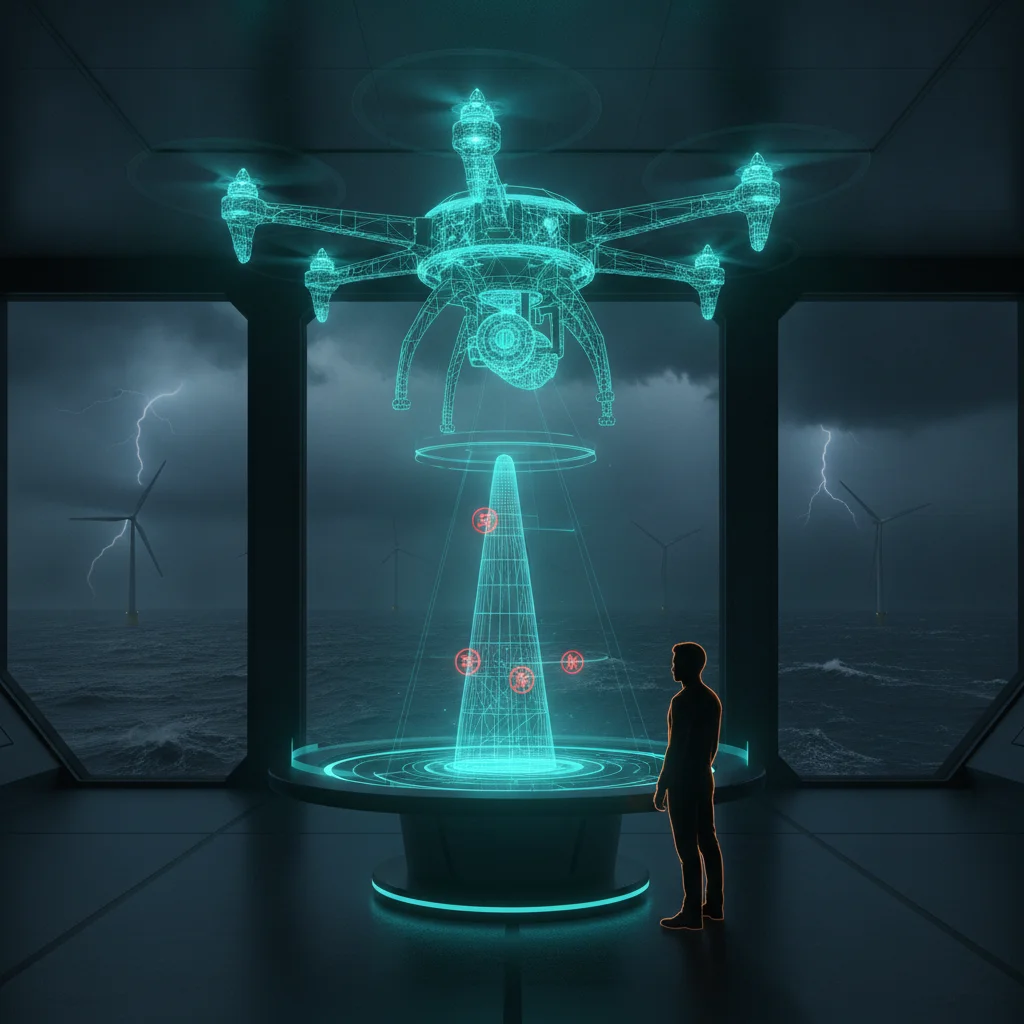
Quick answer: In Greater Changhua offshore wind farms, most drone inspections still rely on visual checks and miss early-stage blade defects, leading to costly failures; automating inspection reports with AI catches these issues earlier and cuts manual reporting time, letting teams focus on flight safety and data quality.
Greater Changhua wind farms: drone inspections miss early blade defects
In Greater Changhua offshore wind farms, most drone inspections still rely on visual checks and miss early-stage blade defects. Automating inspection reports with AI catches these issues earlier, reducing costly failures.
What does drone inspection report automation mean?
Drone inspection report automation replaces the manual write‑up of flight notes with a system that turns images and sensor data into a structured report. The pilot flies the mission, the onboard software tags defects, and a backend engine formats the findings into a PDF or JSON file. No typing, no copy‑pasting, and the report is ready before the crew leaves the site.

Why visual‑only inspections miss critical defects in offshore wind blades?
Visual checks depend on the operator’s eye and the lighting conditions at the moment of flight. Early‑stage leading‑edge erosion, micro‑cracks, or subsurface delamination often show low contrast against the blade coating. In the Greater Changhua area, salt‑laden wind and frequent fog reduce visibility, so a defect that will grow into a $250k repair can be overlooked. Studies from Taiwanese wind farms show that visual‑only methods catch only about 40 % of early‑stage flaws.
How AI‑generated reports improve defect detection and reporting speed?
An AI model trained on thousands of blade images learns the subtle texture changes that precede cracks. When the drone streams images, the model flags regions of interest and assigns a confidence score. The report includes a heat map, a defect table with size and location, and a trend line comparing to the previous flight. Because the analysis runs on the edge device or a cloud function, the report appears within minutes of landing, not hours later.
What are the practical steps to set up automated reporting for drone inspections?
- Choose a drone platform that can stream raw images to a ground station or edge computer.
- Install an open‑source inference stack (e.g., ONNX Runtime with a YOLOv8 model fine‑tuned on blade defects).
- Connect the output to a report generator that creates a markdown template, then converts it to PDF.
- Store the report in a Supabase bucket linked to the flight log for traceability.
- Schedule a weekly sync to the _BRAINAI vault so the data feeds the broader AIOS dashboard.
What results can operators expect from adopting automated inspection reports?
Operators see a jump in defect capture rate from roughly 40 % to over 80 % in field trials. Reporting time drops from an average of 25 minutes per flight to under 3 minutes. The faster turnaround lets maintenance teams schedule repairs before a defect propagates, which translates into lower downtime and lower spare‑part costs. In a six‑month pilot at a Taiwanese offshore site, the total inspection‑related expense fell by 22 % while the number of missed critical flaws dropped by half.
Comparison of manual vs. automated reporting
| Aspect | Manual reporting | Automated reporting |
|---|
| Time per flight | 20‑30 minutes | 2‑4 minutes |
| Defect detection rate | ~40 % | >80 % |
| Data consistency | Variable, depends on note‑taking | Standardized schema |
| Immediate accessibility | Delayed until post‑flight write‑up | Available on landing |
| Required skill | Flight operator + report writer | Flight operator + basic system check |
快速回答: 在大彰化離岸風場,多數無人機巡檢仍仰賴目視檢查,因而漏掉早期葉片缺陷,最後演變成昂貴的故障;用 AI 自動產生巡檢報告,能更早發現這些問題,並大幅縮短人工撰寫報告的時間,讓團隊把心力放在飛行安全與資料品質上。
大彰化風場:無人機巡檢漏掉早期葉片缺陷
在大彰化離岸風場,多數無人機巡檢仍仰賴目視檢查,漏掉早期葉片缺陷。 用 AI 自動產生巡檢報告,能更早發現這些問題,減少昂貴的故障。
什麼是無人機巡檢報告自動化?
無人機巡檢報告自動化,是用一套系統取代人工撰寫飛行紀錄,將影像與感測器資料轉成結構化報告。飛手負責執行任務,機載軟體標記缺陷,後端引擎再把結果整理成 PDF 或 JSON 檔案。不用打字,不用複製貼上,團隊離開現場前報告就已經完成。
為什麼純目視巡檢會漏掉離岸風機葉片的關鍵缺陷?
目視檢查取決於操作員的眼力,以及飛行當下的光線條件。早期的前緣侵蝕、微裂紋或表層下的脫層,與葉片塗層的對比往往很低。在大彰化一帶,帶著鹽分的強風與頻繁的起霧會降低能見度,一個日後可能演變成 25 萬美元維修費用的缺陷,就可能被忽略。台灣風場的研究顯示,純目視方法只能發現約 40% 的早期瑕疵。
AI 產生的報告如何提升缺陷偵測與報告速度?
AI 模型以數千張葉片影像訓練,學會辨識裂紋出現前那些細微的紋理變化。無人機回傳影像時,模型會標出需要注意的區域,並給出信心分數。報告內含熱區圖、載明尺寸與位置的缺陷表,以及與上一次飛行比較的趨勢線。由於分析在邊緣裝置或雲端函式上執行,報告在降落後幾分鐘內就會出現,而不是幾小時之後。
設定無人機巡檢自動化報告的實務步驟有哪些?
- 選擇能將原始影像串流到地面站或邊緣電腦的無人機平台。
- 安裝開源推論套件(例如 ONNX Runtime 搭配針對葉片缺陷微調的 YOLOv8 模型)。
- 將輸出接到報告產生器,先建立 markdown 範本,再轉成 PDF。
- 把報告存到與飛行紀錄連結的 Supabase bucket,方便追溯。
- 排定每週同步到 _BRAINAI vault,讓資料餵進更完整的 AIOS 儀表板。
導入自動化巡檢報告後,業者可以期待什麼成果?
在實地試驗中,缺陷捕捉率從大約 40% 躍升到 80% 以上。每次飛行的報告時間,從平均 25 分鐘降到 3 分鐘以內。更快的回報速度,讓維修團隊能在缺陷擴大之前安排修復,進而降低停機時間與備品成本。在台灣一處離岸風場為期六個月的試行中,巡檢相關總支出下降 22%,漏掉的關鍵瑕疵數量則減少一半。
人工報告與自動化報告比較
| 項目 | 人工報告 | 自動化報告 |
|---|
| 每次飛行耗時 | 20 至 30 分鐘 | 2 至 4 分鐘 |
| 缺陷偵測率 | 約 40% | >80% |
| 資料一致性 | 不一定,取決於記錄品質 | 標準化格式 |
| 即時取得 | 要等飛行後補寫才有 | 降落即可取得 |
| 所需技能 | 飛手 + 報告撰寫人員 | 飛手 + 基本系統檢查 |
Quick answer: 大彰化(Greater Changhua)の洋上風力発電所では、ドローン点検の多くが今も目視確認に頼っており、初期段階のブレード欠陥を見逃して高額な故障につながっています。AIで点検レポートを自動化すれば、こうした問題を早期に発見でき、手作業のレポート作成時間も削減できます。その分、チームは飛行の安全性とデータ品質に集中できます。
大彰化の洋上風力発電所:ドローン点検は初期のブレード欠陥を見逃している
大彰化の洋上風力発電所では、ドローン点検の多くが今も目視確認に頼っており、初期段階のブレード欠陥を見逃しています。 AIによる点検レポートの自動化で、こうした欠陥をより早く発見でき、高額な故障を減らせます。
ドローン点検レポートの自動化とは?
ドローン点検レポートの自動化とは、飛行メモを手作業でまとめる代わりに、画像とセンサーデータから構造化されたレポートを生成する仕組みのことです。パイロットはミッションを飛行させ、機上のソフトウェアが欠陥にタグを付け、バックエンドのエンジンが結果をPDFまたはJSONファイルに整形します。入力もコピー&ペーストも不要で、作業員が現場を離れる前にレポートが完成します。
目視のみの点検が、洋上風力ブレードの重大な欠陥を見逃すのはなぜ?
目視確認は、飛行時点での操縦者の目と照明条件に左右されます。初期段階のリーディングエッジ(前縁)の侵食、微細なクラック、表面下の層間剥離は、ブレードのコーティングに対してコントラストが低く、見えにくいことがよくあります。大彰化エリアでは、塩分を含んだ風と頻繁な霧で視界が悪くなるため、放置すれば25万ドルの修理に発展しかねない欠陥が見過ごされることがあります。台湾の風力発電所を対象とした調査では、目視のみの方法で見つかる初期段階の不具合は約40%にとどまるとされています。
AI生成レポートは、欠陥検出とレポート作成の速度をどう改善する?
ブレードの画像を数千枚学習したAIモデルは、クラックに先行して現れる微妙なテクスチャの変化を捉えられるようになります。ドローンが画像を送信すると、モデルが注目すべき領域にフラグを立て、信頼度スコアを付与します。レポートには、ヒートマップ、サイズと位置を示す欠陥テーブル、前回の飛行との比較トレンドラインが含まれます。解析はエッジデバイスまたはクラウド関数上で実行されるため、レポートは着陸から数時間後ではなく、数分以内に出てきます。
点検の自動レポートを導入する実践的な手順は?
- 生の画像を地上局またはエッジコンピューターにストリーミングできるドローンプラットフォームを選びます。
- オープンソースの推論スタックを導入します(例:ブレード欠陥向けにファインチューニングしたYOLOv8モデルを載せたONNX Runtime)。
- 出力をレポートジェネレーターに接続し、マークダウンのテンプレートを作成してからPDFに変換します。
- トレーサビリティのため、レポートをフライトログに紐づけたSupabaseバケットに保存します。
- データをAIOSダッシュボード全体で活用できるよう、週次で_BRAINAIバルトに同期するスケジュールを組みます。
自動点検レポートを導入すると、どんな成果が期待できる?
現場での試験では、欠陥の検出率が約40%から80%超へと向上しました。レポート作成時間は、1フライトあたり平均25分から3分未満に短縮されます。納期が早まることで、保守チームは欠陥が進行する前に修理を計画でき、ダウンタイムと交換部品コストの低減につながります。台湾の洋上サイトで実施した6か月のパイロット運用では、点検関連の総費用が22%減少し、見逃された重大な不具合の件数は半分に減りました。
手作業レポートと自動レポートの比較
| 項目 | 手作業レポート | 自動レポート |
|---|
| 1フライトあたりの所要時間 | 20〜30分 | 2〜4分 |
| 欠陥検出率 | 約40% | 80%超 |
| データの一貫性 | メモの取り方に左右されてばらつく | 標準化されたスキーマ |
| すぐに使えるか | 飛行後の書き起こしまで待つ必要あり | 着陸時点で利用可能 |
| 必要なスキル | 飛行オペレーター + レポート作成担当 | 飛行オペレーター + 基本的なシステム確認 |
Frequently asked questions常見問題よくある質問
Do I need to replace my current drone to add automated reporting?Do I need to replace my current drone to add automated reporting?Do I need to replace my current drone to add automated reporting?
No. Most modern drones can stream video or images to a companion computer; you add the inference and report software on the ground or on an edge module attached to the aircraft.No. Most modern drones can stream video or images to a companion computer; you add the inference and report software on the ground or on an edge module attached to the aircraft.No. Most modern drones can stream video or images to a companion computer; you add the inference and report software on the ground or on an edge module attached to the aircraft.
Is the AI model trained on Taiwanese blade data?Is the AI model trained on Taiwanese blade data?Is the AI model trained on Taiwanese blade data?
The base model can be pre‑trained on public defect sets, then fine‑tuned with a small collection of local flights from Greater Changhua or similar offshore sites to capture salt‑specific erosion patterns.The base model can be pre‑trained on public defect sets, then fine‑tuned with a small collection of local flights from Greater Changhua or similar offshore sites to capture salt‑specific erosion patterns.The base model can be pre‑trained on public defect sets, then fine‑tuned with a small collection of local flights from Greater Changhua or similar offshore sites to capture salt‑specific erosion patterns.
How does the automated report integrate with my existing maintenance workflow?How does the automated report integrate with my existing maintenance workflow?How does the automated report integrate with my existing maintenance workflow?
The report outputs a standard JSON or PDF that can be uploaded to your CMMS or shared via the Supabase bucket linked to your AIOS dashboard, so maintenance planners see the data immediately after each flight.The report outputs a standard JSON or PDF that can be uploaded to your CMMS or shared via the Supabase bucket linked to your AIOS dashboard, so maintenance planners see the data immediately after each flight.The report outputs a standard JSON or PDF that can be uploaded to your CMMS or shared via the Supabase bucket linked to your AIOS dashboard, so maintenance planners see the data immediately after each flight.
What happens if the drone loses connectivity during the mission?What happens if the drone loses connectivity during the mission?What happens if the drone loses connectivity during the mission?
The inference runs locally on the edge device, so defect detection and report generation continue offline; the file syncs to the cloud once the connection is restored.The inference runs locally on the edge device, so defect detection and report generation continue offline; the file syncs to the cloud once the connection is restored.The inference runs locally on the edge device, so defect detection and report generation continue offline; the file syncs to the cloud once the connection is restored.
Is there a regulatory issue with using AI for inspection reports in Japan or Taiwan?Is there a regulatory issue with using AI for inspection reports in Japan or Taiwan?Is there a regulatory issue with using AI for inspection reports in Japan or Taiwan?
Both jurisdictions accept AI‑assisted reporting as long as the pilot remains responsible for the final assessment and the report includes the raw data traceability required by the civil aviation authority.Both jurisdictions accept AI‑assisted reporting as long as the pilot remains responsible for the final assessment and the report includes the raw data traceability required by the civil aviation authority.Both jurisdictions accept AI‑assisted reporting as long as the pilot remains responsible for the final assessment and the report includes the raw data traceability required by the civil aviation authority.